

By Brian Massie, A Watchman on the Wall
Thanks to a Lake County patriot for sending me this article.
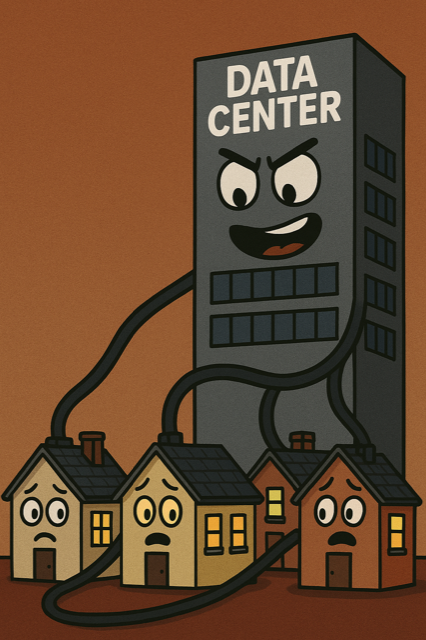
The Hidden Cost of the Meta–Vistra Nuclear Deal: Ohio Residents Lose Access to Existing Baseload Power
Supporters of the Meta–Vistra agreement are celebrating this as a major economic victory. They point to the preservation of nuclear jobs, long-term investment at Perry Nuclear Power Plant, and the promise of expanded energy generation.
But there is a critical fact being overlooked.
The net effect is that existing 24/7 baseload nuclear power is being committed to a single corporate customer—Meta—while Ohio residents and businesses are left competing for what remains.
Existing Power Is Being Redirected, Not Created
The agreement covers more than 2,600 megawatts of nuclear generation from Perry, Davis- Besse, and Beaver Valley.
Of that amount:
- Approximately 2,176 megawatts already exist and are operating today.
- Only 433 megawatts are expected to come from future uprates over the
next decade.
That means more than 80% of the electricity in this deal is not new generation.
It is power that was already supporting homes, hospitals, schools, manufacturers, and small businesses throughout Ohio and the PJM region.
Meta’s Massive Demand Consumes Existing Supply
Meta’s artificial intelligence and cloud computing operations require enormous amounts of electricity around the clock.
When Meta contracts for this output, it effectively reserves the economic benefit of that existing nuclear generation for its own use.
The electrons still flow through PJM, but the market effect is the same: the rest of the grid must replace the power that is now serving Meta’s load.
Ohio Already Faces Tight Supply Conditions
Ohio has become increasingly dependent on regional imports during certain periods, particularly as older coal and gas plants retire and electricity demand rises.
At the same time:
- Data centers are expected to add thousands of megawatts of new demand.
- Electrification is increasing overall consumption.
- Reserve margins across PJM are tightening.
- Capacity prices have risen sharply.
In this environment, dedicating existing nuclear output to one company reduces the effective surplus available to everyone else.
The Numbers Tell the Story
Under the agreement:
- Existing nuclear output committed to Meta: 2,176 MW
- Future new generation from uprates: 433 MW
- Net immediate increase to the grid: essentially zero
Even if every planned uprate is completed, the system gains only a fraction of the power needed to offset Meta’s enormous 24/7 consumption.
What This Means for Residents
Unless substantial new generation is built, the likely consequences include:
- Greater reliance on imported electricity
- Higher wholesale and retail power prices
- More transmission expansion costs
- Increased risk during extreme weather
- Potential use of demand response and curtailment programs
In short, residents may pay more for electricity while a significant share of existing reliable nuclear power is effectively dedicated to one of the world’s largest corporations.
A Public Asset Serving Private Interests
Perry Nuclear Power Plant has been a cornerstone of Ohio’s electric system for decades.
Its value lies in providing steady, carbon-free electricity to the broader public.
When the vast majority of that output is committed to a private technology company, the public should ask:
- What is the true net benefit?
- Who bears the increased costs?
- Will local communities see meaningful compensation?
- How much additional infrastructure will ratepayers fund?
The Real Bottom Line
This agreement is often described as an expansion of clean energy.
In reality, the immediate effect is largely a reassignment of existing baseload power to Meta.
Only a modest amount of new capacity is planned, and much of that will not arrive for years.
Until substantial new generation is actually built, Ohio households and businesses will have fewer uncommitted baseload resources available to meet their needs.
The result is simple: Meta gains long-term access to some of the region’s most reliable electricity, while Ohio residents face tighter supply, higher costs, and greater dependence on imported power.
Editorial Comments by Brian Massie, A Watchman on the Wall
There are over 200 data centers currently in Ohio, and there are thousands of requests for additional centers. My question for the state officials like Comrade Jerry C RINO, how many data centers can the State of Ohio support?
Is it the vision of Comrade C RINO to turn Ohio into a wasteland of 20,000 data centers, while the rest of the remaining citizens are on subsistence living depending on the benevolent dictators controlling Ohio.
Categories: Uncategorized