


Kim Fraser, Executive Director
Lake County ADAMHS Board
Lake County Leads Nation in Reducing Overdose Deaths
Mentor, OH – Lake County recorded the largest percentage decline in overdose death rates among 550 U.S. counties included in a recent analysis of federal mortality data, highlighting the impact of years of local collaboration, prevention efforts, treatment expansion and recovery support.
According to an analysis by AddictionResource.net, reported by WAKR radio, Lake County’s overdose death rate declined 75.2% between 2020 and 2025, falling from 40 deaths per 100,000 residents to 9.9. Ohio’s statewide overdose death rate declined 53.2% during the same period, the largest percentage decrease among the 50 states.
For the Lake County Alcohol, Drug Addiction and Mental Health Services (ADAMHS) Board and its community partners, the findings reflect the importance of a sustained, collaborative response to addiction and the need to continue expanding access to prevention, treatment and recovery services starting with the opioid epidemic back in the late 2000’s.
“When we first brought together the Lake County Addiction Task Force in 2010, we knew we were facing a growing opioid crisis with no clear roadmap,” stated Kim Fraser, Executive Director of the Lake County Alcohol, Drug Addiction and Mental Health Services (ADAMHS) Board. “Over the past 15 years, our community has responded through collaboration, innovation and persistence. We have expanded prevention, treatment and recovery services, increased awareness and connected more residents with the support they need. While there is still important work ahead, this progress shows that a coordinated community response can save lives.”
State and local investments strengthen the community response
Local tax levy funding allows the ADAMHS Board to invest directly in Lake County prevention, treatment and recovery services while leveraging state and federal resources to expand their impact.
These complementary investments help extend the reach of prevention messages while connecting residents with local resources, including overdose prevention education, naloxone, fentanyl test strips, treatment and recovery support.
“Public awareness is critical, but awareness alone is not enough,” Fraser said. “People need to know where to turn for help, and services must be available when they are ready to seek them. By combining state-supported initiatives with the expertise of local providers and community partners, we can connect more residents with the prevention, treatment and recovery supports they need.”
While no single program or funding source can fully explain the decline, the findings underscore the value of a coordinated community response. Lake County’s progress reflects the collective efforts of treatment providers, prevention professionals, recovery organizations, healthcare systems, first responders, schools and community partners working toward a common goal.
Recovery support makes a lasting difference
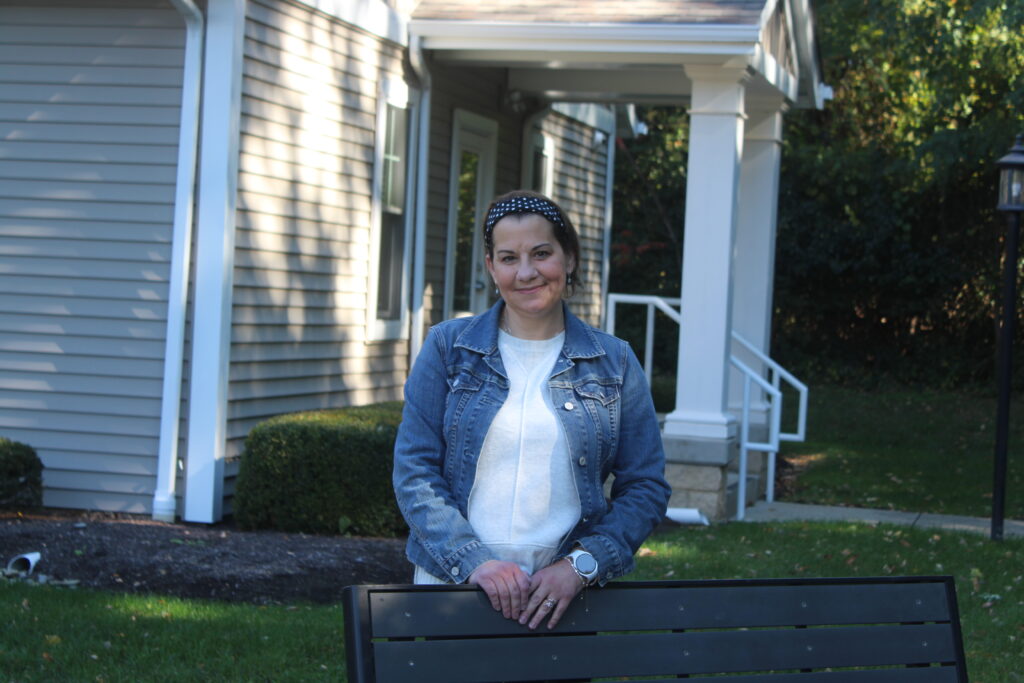
Angela Julian stands outside Oak House, a Lake-Geauga Recovery Centers property that provides long-term, nonmedical residential substance use treatment for women at all stages of life.
For Angela Julian, a Lake County resident who has been in recovery for six years, treatment and ongoing support through Lake-Geauga Recovery Centers (LGRC) have helped her rebuild her life, secure stable housing, find employment and reconnect with her family.
“I was prepared to die or be in prison. I was truly out of options, and I didn’t know what sobriety would look like. I didn’t think I was capable of getting there,” Julian said. “My mom took care of me for so long that now I can take care of her. Sobriety has allowed me to be present in my daughter’s life. That’s a gift I never thought I would get.”
Through counseling, education, sober living and connections to essential resources, Julian learned that recovery takes time and that lasting change is possible. Her journey highlights the importance of access to treatment and continued recovery support, demonstrating how services provided by community partners like LGRC, supported by the Lake County ADAMHS Board, can help residents reclaim their lives and rebuild meaningful relationships.
“We know we cannot take our eye off the ball,” Fraser said. “The challenges continue to change, and our response must continue to evolve with them. We are grateful for the partnerships that have brought us this far, and we remain committed to working together to build on this progress and save lives.”
Lake County residents seeking help and resources for mental health or substance use services can contact the Compass line at 440-350-2000, weekdays from 8:30 a.m. to 4 p.m. For immediate crisis support, call Lake County Crisis Hotline at 440-953-8255 or text 988. For information about local services and supports, visit HelpThatWorks.us.
About the Lake County Alcohol, Drug Addiction and Mental Health Services (ADAMHS) Board: The Lake County ADAMHS Board plans, funds, monitors, and evaluates services available to residents who are living with mental illness and/or substance use disorders. For more information, visit our website at HelpThatWorks.us
Categories: ADAMHS Board