

Mentor Resident Says Vote No On Mentor School Levy
By Gil Martello, Mentor Resident
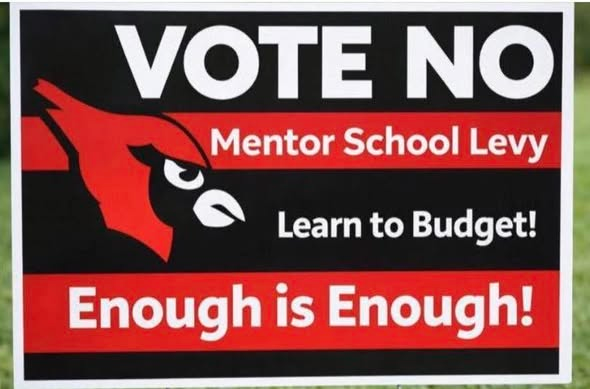
Let’s start with something that should not be up for debate: teachers deserve to be paid well. They are on the front lines every day, educating our children in an environment that has become more demanding with each passing year. Inflation has affected everyone, and educators are no exception. Competitive salaries are necessary to retain good teachers and attract new ones. That is a reasonable position, and it is one I share.
But that is not the real question voters are being asked to answer with Issue #1.
The real question is whether increasing property taxes by more than $13 million annually is justified without first addressing the structure of the system those dollars are going into. Supporting teachers and questioning the system around them are not contradictory positions. In fact, they are inseparable if we are serious about long-term sustainability.
Over time, school systems—Mentor included—have grown far beyond the classroom. Layers of administration, departments, programs, and initiatives have been added incrementally, often with good intentions. But the result is a system that continues to expand regardless of enrollment trends, academic outcomes, or the financial pressures faced by the residents who fund it. When taxpayers are asked for more, it is fair to ask where that money is going and whether the system itself has been examined with the same level of scrutiny.
Anyone driving through the city can see the number of signs supporting Issue #1. That level of visibility can create the impression of overwhelming community consensus. But signs do not appear by accident, and they do not reflect sentiment as much as they reflect organization. Political signage requires funding, coordination, compliance with state law, and a structured effort to design, print, and distribute materials. What we are seeing is not spontaneous support—it is the result of a well-organized campaign.
That campaign is backed by established groups, including the Mentor Teachers Association and the Citizens Committee Supporting Mentor Schools. Campaign finance filings available through the Lake County Board of Elections show a consistent and organized flow of contributions supporting this effort. Those filings also indicate that a notable portion of the funding originates from outside the City of Mentor, with contributions coming from surrounding communities such as Willoughby, Painesville, Concord Township, Madison, Wickliffe, and Kirtland.
There is no indication that any of this activity is improper. It appears to be fully compliant with Ohio law. However, it does highlight something that voters should understand clearly: this is not solely a grassroots, Mentor-driven effort. It is a structured campaign with regional financial backing and the infrastructure to influence what people see and hear every day.
Meanwhile, those who question Issue #1 are largely individuals—residents who do not have access to the same level of funding, organization, or coordinated messaging. The absence of “Vote NO” signs is not evidence of agreement. More often, it is evidence of a lack of resources. Grassroots opposition rarely has the machinery required to compete with an organized campaign.
Against that backdrop, it becomes even more important to understand what Issue #1 actually represents. According to the Lake County Board of Elections, it is a 4.9-mill additional levy for current expenses that will generate approximately $13.4 million annually, cost property owners about $172 per $100,000 of home value, and remain in place for five years beginning with collections in 2027. That is not a minor adjustment. It is a meaningful increase in property taxes that will affect every homeowner in the community.
The central issue, then, is not whether education deserves support. It does. The issue is whether the current structure of the system justifies asking residents to contribute significantly more without first demonstrating that existing resources are being used as efficiently as possible.
There is a clear distinction that needs to be made—one that often gets blurred in these discussions. Investing in teachers and classrooms is not the same as sustaining an expanding administrative structure. Competitive pay, classroom resources, and meaningful career training for students are direct investments in outcomes. Expanding layers of administration and supporting programs with unclear returns are something else entirely. Taxpayers are justified in asking how much of any new funding will reach the classroom and how much will be absorbed by the system surrounding it.
In any well-run organization, whether public or private, increased funding is not the first response to financial pressure. The first step is to examine operations, identify inefficiencies, and make necessary adjustments. Only after that process is complete does it make sense to ask for additional resources. That standard should apply here as well.
What many residents are feeling right now is not opposition to education. It is concern about sustainability. Property taxes continue to rise while many households are already stretched thin. For those on fixed incomes, the impact is even more significant. A school system cannot operate in isolation from the economic realities of the community that supports it.
That is why this moment calls for more than a simple yes-or-no decision on funding. It calls for a broader conversation about structure, priorities, and accountability. Before asking taxpayers for more, there should be a clear and transparent effort to evaluate administrative costs, staffing levels, and program effectiveness. Without that, the request for additional funding feels less like an investment and more like a continuation of an unchecked trajectory.
Issue #1 ultimately comes down to trust. Trust that the system is operating efficiently. Trust that new funding will be directed where it matters most. Trust that the burden placed on taxpayers is justified.
Supporting teachers and supporting reform are not opposing ideas. They are, in fact, part of the same solution.
Pay teachers what they deserve. Invest in students. But also demand that the system surrounding them be accountable, efficient, and sustainable.
Because without reform, simply adding more funding does not fix the problem—it prolongs it.
ADVERTISEMENTS


Categories: Mentor, Real Estate Taxes