

A Parent Must Come Forward to Protect Ohio Children
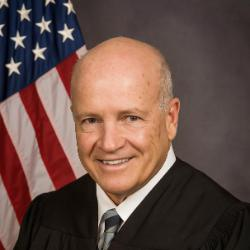
By Judge David Engler, Juvenile Court Judge, Trumbull County, Ohio
As a juvenile court judge, my first duty is — and always has been — to protect children. Every day, I see the realities most Ohioans never witness: children groomed by traffickers, manipulated by predators, exploited by adults who rely on secrecy and fear. In those moments, the most important safeguard a child has is not the court, not the state — but her parent.
Recently, I asked the Ohio Supreme Court to recognize that eliminating parental consent for minors seeking abortions removes that safeguard entirely. I filed a mandamus action because I believed — and still believe — that parents have a fundamental right to be involved in major medical decisions affecting their children. The Attorney General, Dave Yost, moved to dismiss my lawsuit as one of his final acts in office, arguing that I lacked standing. The Ohio Supreme Court dismissed the case without explanation.
I accept the Court’s decision. But I will not accept the idea that this issue is settled.
Because the consequences of eliminating parental involvement are not theoretical. They are real. They are dangerous. And they are already being felt in courtrooms across Ohio.
Under the current legal framework, a trafficker or predator can take a minor to obtain an abortion — erasing the evidence of exploitation — without a parent ever knowing. That is not a political talking point. That is the lived reality of the children who appear before juvenile judges every day. When the law removes parents from the equation, it removes the person most invested in a child’s safety, future, and dignity.
Although my lawsuit was dismissed, the path forward is now clearer than ever.
Earlier this year, the United States Supreme Court issued a significant decision in Mirabelli v. Bonta. In that case, the Court held that government‑mandated secrecy — policies that intentionally keep parents in the dark about critical decisions affecting their children — is constitutionally suspect. The Court reaffirmed that parents are “the primary protectors of their children’s health, safety, and moral development.”
That principle matters deeply in Ohio.
If schools cannot hide important information about a child’s identity from parents, then surely the State cannot hide a life‑altering medical procedure. Mirabelli makes clear that parents have a federal constitutional right to be involved in major decisions affecting their children — and that right does not disappear because a state constitutional amendment was passed without fully informing voters of its consequences.
The Ohio Supreme Court has made clear that judges cannot bring this challenge. I respect that boundary. But parents can. Parents are the ones whose federal rights are implicated. Parents are the ones the Supreme Court has recognized as the primary guardians of their children’s welfare. Parents are the ones who can now bring a federal case arguing that Ohio’s current framework violates their constitutional rights under the Due Process Clause.
My role is not political. It is protective. And I will continue to speak out when the welfare of Ohio’s children is at stake. I will continue to raise concerns when laws unintentionally empower traffickers, abusers, or predators. And I will continue to stand with every parent who refuses to let their child face the world alone.
The dismissal of my lawsuit is not the end of this conversation. It is the beginning of the next chapter — one where parents step forward, armed with the strongest constitutional language in decades, to restore the protections their children deserve.
Ohio’s children are counting on us. And I will continue to stand with them.
ADVERTISEMENTS

Will you stand on the front lines with us to save freedom and liberty for future generations?


Categories: Community Activism, Free Speech Zone, Human Trafficking